
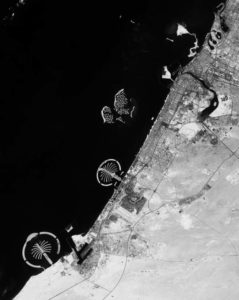
Figure 1. NASA released this 2008 picture taken from space that shows Dubai’s massive coastal project—Palm Islands— with groups of several artificial islands. The two Palm Islands are at the lower end, and the ongoing World Island is at the upper end. Each project will build thousands of villas and apartments.
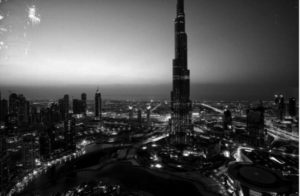
Figure 2. The Burji Khalifa Tower in Dubai, at 2,716.5 feet and more than 160 stories, is the tallest building in the world. It was designed by SoM, a prestigious American architectural firm.
28/5P7C0N8Q00Ao0001.jpg.
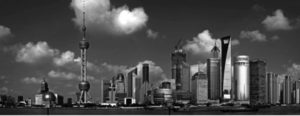
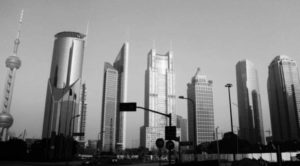
Figure 3. New development of Pudong, Shanghai. These buildings and urban developments are less than twenty years old. Shanghai has become one of the most influential financial, trading, economic, and communication centers in Asia. The Pudong District is filled with symbolic buildings, including the oriental Pearl Tower, the Jin Mao Tower, the Shanghai World Financial Center, and the under-construction Shanghai Tower.
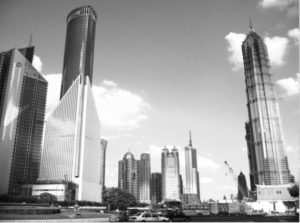
Figure 4. A vast farming land twenty years ago, Shanghai’s Pudong District has undergone rapid and massive transformation toward urbanization and now has more than three million residents. The skyscraper on the left is the fifty-three story Bank of China Tower, designed by the Japanese architectural firm Nikken Sekkei. The skyscraper on the right is the eighty-eight story Jin Mao Tower, designed by the American architectural firm SoM.
The use of massive scale and unique forms can easily create architectural urban symbolism for landmark buildings. In the advertising industry, the main strategy to promote a brand and sell a product has been the attempt to gain attention. If manufactured urban symbols receive enough attention, they can become imprinted. In Dubai and Shanghai, landmark buildings play the role of urban symbols to draw attention to the city’s features. For example, the exterior of the Burj Al Arab Hotel of Dubai creates a dramatic profile of the dhow, a traditional Arab sailing vessel that effectively reflects Dubai’s traditional fishing culture while drawing attention to its beautiful beach. This building has become the symbolic statement of Dubai. In Shanghai, the eighty-eight story Jin Mao Tower borrows the form of traditional Chinese pagodas to reflect the city’s urban image. These high-profile landmark buildings, designed by well-known architects, demonstrate that place-market strategy can provide a city with a brand while showcasing the amazing progress of urban transformation and promoting iconic images as favorable destinations for business and leisure.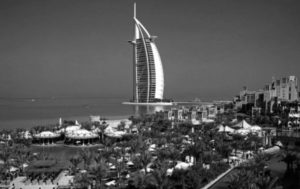
Figure 5. The Burj Al Arab Hotel at Dubai is a five-star hotel designed by British architectural firm Atkins. Completed in 1999, the symbolic structure mimics the shape of a ship’s sail. This hotel has been highly promoted to be Dubai’s branding image since the early 2000s.
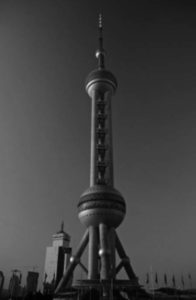
Figure 6. Shanghai oriental Pearl Tower is located at the tip of Lujiazui in the Pudong District, facing the Huangpu River and the famous Shanghai Bund. It functions as a broadcasting tower and a tourist observation tower. Completed in 1994, this tower was highly promoted as the major branding image of Shanghai in the 1990s, highlighting the city’s open policy and demonstrating the pro-business change of the city’s political agenda.
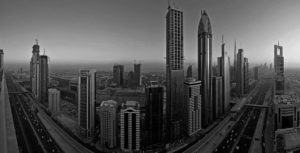
Figure 7. Today’s downtown Dubai continues construction of landmark buildings.