
Editor’s Note: One tool among many that can both improve the environment and help desperately poor people economically flourish is a guarantee of private property rights. The article below is an update to a previous article, “Property Rights and One Indian Village: Reform, Enterprise, and Dignity” that appeared over five years ago in the winter 2015 issue (volume 20, no. 3). Readers who are particularly interested in the story of how property rights transformed the environment and the lives of some of the most desperately poor Indians are highly encouraged to first read the 2015 article at https://tinyurl.com/43r24n9s.
The great obstacle to economic development in rural India is a lack of property rights, according to Trupti Mehta, lawyer for the Action Research in Community Health and Development (ARCH) center. Optimistic and determined, Trupti and her husband, Ambrish Mehta, solved this problem for tribal farmers on their thirty-three-year journey in Gujarat Province, a few hours’ drive from the city of Baroda. Joining Anil Patel, a physician who founded ARCH to help the rural poor, they initially pushed for redistributive justice in 1988. But soon, their mission was transformed into advocacy for property rights and a spectacular improvement in the lives of thousands.1
The Problem
Gujarat “tribal” farmers, the Scheduled Tribes that are constitutionally recognized lower classes outside the formal Hindu caste system, were hardy, self-reliant, and highly creative but deprived of the benefits of their efforts. Relegated to the bottom of the social structure, tribal families gravitated to remote forest regions of the countryside, where they managed a livelihood by farming and utilizing forest resources. Under British rule, however, vast forest regions of the countryside were nationalized, and tribal villagers became dispossessed and destitute. When the British departed, the Indian government took control of the National Forests and treated tribals harshly, as if trespassers on the very lands their ancestors had tilled for ages. One crucial incident helped turn the tide. Forest officials were accustomed to destroying tribal crops and structures, confiscating livestock, and forcing farmers into roadwork as punishment. Trupti Mehta, bolstered by her newly acquired law degree, marched with 400 supporters to the Forest Department headquarters in 1995 and demanded the return of six head of cattle that had been taken from the farmers. The next day, Trupti was arrested on a charge of theft of “government” property. Though she was released after a night in jail, widespread publicity and public outcry eventually led to clamor for a recognition of tribal farmers’ rights. Since Trupti was charged with dacoity (an act of gang robbery in India), she came to be popularly known as the “Bandit Queen.”2 A change in public attitude was spurred on by a property rights case before the Supreme Court and subsequent orders by the Ministry of Environment and Forests to acknowledge rights to title. Eventually the Forest Rights Act (FRA) of 2006 permitted farmers to own and work their ancestral lands if they could prove they worked the land prior to December 2005. Between 2008 and 2012, ARCH had helped hundreds of tribal families file their claims. Officials initially rejected more than 90 percent of the applications, however, saying the farmers offered insufficient proof of working the land. It was very difficult for poor farmers to prove to the satisfaction of a bureaucracy that was loathe to relinquish control over National Forest lands. For instance, in areas where ARCH was working, if title transferred to the farmers, then politicians and bureaucrats would be hampered in allocating lucrative bamboo harvesting contracts to favored papermill owners. Then, ARCH brought a lawsuit before the Gujarat High Court in 2011 that resulted in a landmark decision in 2013. The court issued strict instructions to the authorities to follow both the letter and the spirit of the Forest Rights Act.The Solution
Coming to the rescue of tribal applicants was Ambrish Mehta. Ambrish devised a foolproof plan to use GPS together with Google satellite imagery from 2005, a year prior to passage of the Forest Rights Act of 2006. These maps clearly identified lands that had been cleared and surrounded by bunds (embankments often used in India to control the flow of water), interlaced with irrigation, housing, and sheds. Next, he outfitted and trained farmers in the use of GPS devices that could be carried by hand around the perimeter of croplands, livestock pens, and houses to pinpoint coordinates that would be transferred to his computerized mapping system. The cost of equipment and training was minimal, about US $1 per farm. ARCH organized gram sabhas, or forest committees of ten to fifteen people from each community, as required under the FRA, to evaluate all claims and resolve disputes before certifying the package of applications from the village. The state government accepted these maps as evidence, and since the agency didn’t have proper in-house expertise, the government made arrangements for independent, third-party verification from the research branch of the Forest Department in Gandhinagar. Subsequently, the number of land title approvals soared. (See Table 1 for the impact of the court decision on the 3,461 forest villages of Gujarat State.)3 Recent verification has been achieved for 3,000 claims in thirty villages of Narmada District, recommending approval of 98 percent of the claims, all with the proper land area that was requested.4 Previously, a farmer who applied for certification of two acres of land might receive arbitrary approval for one acre or less with no regard for the actual configuration of the coordinates submitted. Now, the average approval was for the full amount requested, doubling the land under title for development and cultivation.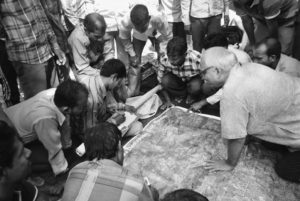
The Consequence
Once title was secure, even pending title was enough to make a difference and land development began. Land leveling and surveys make sense with secure ownership because of the immediate incentive for long-term planning. Trupti explained, “There is much improvement in the economic status of these families. To give you an idea, these families were taking [harvesting] only one crop of maize previously, but after getting titles, they have been doing land leveling with 20,000 to 100,000 rupees (US $273 to US $1,368) of their own money. That enables them to take two or three crops, which increases their income manyfold. When you visited in 2016, Ramabhai and other families of Sagai Village were constructing a well for them- selves. They have constructed water containment walls and installed solar engines for irrigation!”6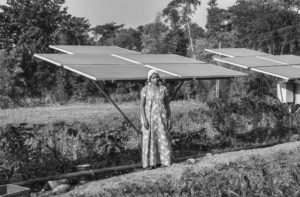
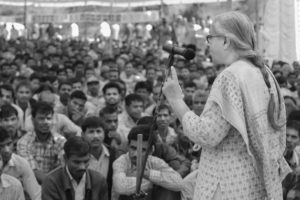
Sidhhesh Pawar.
Farm Producer Organizations
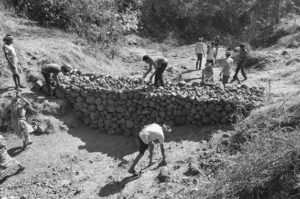
Community Forest Reserve Management
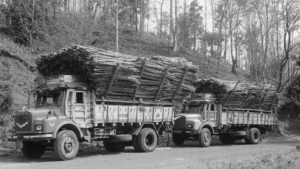
The same Forest Rights Act that granted individual farmers title to their lands also granted to community gram sabhas ownership and control over common forest resources. Within certain limits, this empowered community forest management committees in each region to protect, regenerate, conserve, manage, and otherwise utilize much of the forest resources, the most important of which was bamboo. Mature, dead, and dry bamboo is widely harvested to make paper or to be used for construction. The same GPS devices that were used for mapping titles to their land are now being used to map forest resources and design watershed management plans from ridges to valleys. The ten to fifteen gram sabhas have already undertaken measures to prevent forest fires and illegal felling.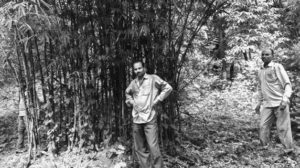
Banking
Once tribal farmers had secure titles to their land, their access to credit improved dramatically. Collateral was important, of course, but equally so was the solid, esteemed reputation of a settled owner of proven, productive property. “Without title to the land, banks were not willing to give any loans to these tribal farmers,” said Ambrish, “not even crop loans. But after they got titles to the land and after our sustained efforts, banks have come to give Kisan credit cards (KCC) to these farmers. Two banks, Bank of Baroda and Baroda Gujarat Gramin Bank, have appointed eleven bank correspondents [Bank Mitra, or “Friends” Bank] for doing all bank transactions at their villages so the people would need not go to the main branch in the city.” With land title, 1,000 farmers have been issued credit cards, and each farmer can get a crop loan of 40,000 to 50,000 rupees (US $540–US $684). “Four thousand farmers qualify for these credit cards, but so far the government has been slow to issue them,” said Ambrish. “All loans have been repaid, 100 percent, so their credit reputation is excellent. Everybody wants to repay or they won’t get a loan the next time.” Banks have been able to issue loans for small amounts and minor transactions through the use of these “bank correspondents” agents working on commission who travel between town and country to make “micro” loan arrangements. “Sometimes the internet connection was so bad in the villages that the farmers have to deal with the correspondents just outside the door of the bank office, using the bank’s internet connection,” laughed Ambrish. “Still, they prefer dealing with the correspondents rather than with bank officers. At first, the correspondents were hired by the bank, but the farmers lacked trust in them. Now the villages select their own correspondents to work with the bank on commission. Everyone knows each other, and they are more responsive.” Correspondents are hoping to earn a cash income of up to 8,000 or 10,000 rupees (US $109–US $136) per month. But for now, during these tough times, correspondents have only been averaging 5,000 rupees (US $68) a month. There are very few private banks licensed in Gujarat, and public-sector banks dominate finance across India, with 60 percent of all loans in 2020. This is down from 74 percent of the loan market just five years before because of heavy nonperforming asset losses suffered during the 2008–2009 recession and a very high staff expense-to-total income ratio.10 Nevertheless, public banks are able to offer loans to ARCH farmers as low as 4 percent annual interest, compared to 2 percent per month at private banks.Sanitation and Education
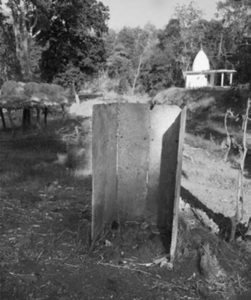
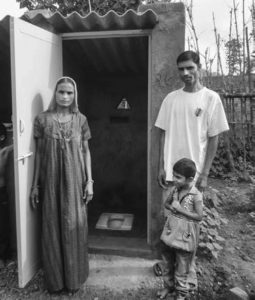
“The thing that personally impressed me the most,” opined Barun, “was one of the earliest developments. A few thousand families who received the title initially, even truncated titles, began investing in building toilets inside or close to their homes. In contrast, for over a decade, there were various government programs to improve sanitation by making people aware of the need for hygiene. But here were some of the poorest people deciding to invest their own money and labor to build their own toilets the moment they felt secure about the title over their own homes. From baking bricks to designing their toilets, they did almost everything on their own.” The pressure for improved toilet facilities was coming especially from women and girls. The motivation for well-designed facilities close to the living quarters was as much for improved security as for convenience and sanitation. When traveling to the countryside to meet with community groups, Barun would frequently break to photograph and document the so-called “outhouses” that were thrown together by government contractors. Locals would tell him that no one would use these as toilet facilities, since most were crudely constructed and inconveniently located. Rising incomes also meant that families could send their children to better schools for more years of higher education. It was always a driving factor to have kids get more training so they could earn more cash income and bring more professional skills back to the village—as good nurses or honest police. “As families become richer and children have a better chance of survival, they have fewer children and plan long term,” concluded Ambrish.