
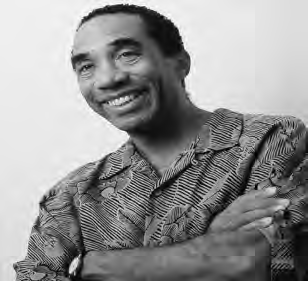
 Regge Life is the founder of Global Film Network Inc. Early in his career, Life worked as an American Film Institute intern on John Landis’s Trading Places. He went on to direct episodes of Sesame Street, The Cosby Show, A Different World, and Sister, Sister. He is Executive Producer/Director for documentaries such as Doubles, After America . . . After Japan, Live Your Dream: The Taylor Anderson Story, and Cocktail Party. He produced his first work in Japan, Struggle and Success: The African-American Experience in Japan, in 1992. He has made several films on Japan and initially went to the country as a Creative Artist’s Fellow with the Japan/US Friendship Commission and Bunka-chō. Life has additionally worked on television programs such as CBS News’ Saturday Night with Connie Chung and NBC’s Yesterday, Today, and Tomorrow, and is the recipient of many awards, including four CINE Golden Eagles. He was honored by the Black Filmmakers Hall of Fame and chosen a Sony Innovator in 1991.
In the brief interview that follows, Regge Life discusses two of his Japan-related films, Live Your Dream: The Taylor Anderson Story (2012) and Cocktail Party (2016). Both films received highly favorable EAA reviews and are strongly recommended for teachers and students. Here are a couple of excerpts from the reviewer of both documentaries, David Huebner:
Nearly 20,000 lives were lost in the Great East Japan Earthquake and Tsunami on March 11, 2011. With such devastating losses, including over US $500 billion in property destruction, it is a challenge to sort out numerous tributes to the many lives lost. However, Live Your Dream: The Taylor Anderson Story stands out as personal, reflective, honest, and richly filled with a sense of hope. —Education About Asia 18, no. 2, fall 2013 Cocktail Party (based upon Tatsuhiro Oshiro’s novel by the same name) features superb acting, an intriguing plot, and an informative portrayal of the social conditions on Okinawa that have complicated US and Japanese relations for decades. A documentary of the Okinawa problem may not have the personal and emotional impact this film has on the viewer. — Education About Asia 21, no. 3, winter 2016Readers may read both EAA film reviews in our archives at https://tinyurl.com/4ya73ds5 and https://tinyurl.com/3s2b4twd. Educators interested in purchasing either or both films may visit www.thetaylorandersonstory.com or www.cocktailpartythemovie.com. For Life’s earlier films on Japan, please email globalfilmnt@earthlink.net or visit http://globalfilmnetwork.net/films.html. You may view a recent short film made by him, Memories of the 1964 Tokyo Olympics and Best Wishes for the 2020 Tokyo Olympics, on YouTube at https://tinyurl.com/25sm3x76.
Lucien Ellington: Regge, your film credits and cinema experience transcend Japan, but our readers would be especially interested in knowing a bit about your early life, what stimulated your interest in Japan, and brief depictions of the three earlier Japan films you created that are also available.Regge Life: Thank you for this question, Lucien. I was first attracted to the cinema of Japan when I was in graduate school at NYU. I was pursuing an MFA in directing, and so I was able to construct a program of study that allowed me to take classes in both the theater and film departments. I have been asked this question before: “What was the first Japanese film you saw?” and truthfully, I cannot remember. But what I do remember is going to the Elgin Theater, a revival house that used to be at Eighteenth Street and Eighth Avenue. They would pick a famous international filmmaker and do a full day of their movies from morning into the night. It was there that I watched early Kurosawa films, Naruse, Kinoshita, Mizoguchi, and of course Ozu. Their various styles of storytelling intrigued me. I was also fascinated by the way they moved the camera with the action that was so powerful and compelling, which I later found out had influenced the French new wave filmmaking. Still many years would pass before I could revisit these early cinematic influences as I prepared to go to Japan for the first time. In 1990, I observed the making of Tora San #43 as a Creative Artist Fellow, which was a partnership between the National Endowment for the Arts and Bunka-cho. During my time with Yamada-gumi, the term used to describe the creative team behind Tora San, I also witnessed the final seasonal filming for Musuko in the city of Hachinohe. When my six-month fellowship came to an end, I began to debrief my total experience in Japan. As an African-American, it was a profound awakening. You see, I had decided to visit Japan during a time when extremely insensitive comments had been spoken by high officials in Japan, so friends understanding my creative inclinations but fearing for my safety urged me to turn down the fellowship. At the end of the six months, my experiences in Japan turned out to be completely opposite of what my friends feared, and speaking with other African-Americans who had made Japan their home at that time prompted my first documentary, Struggle and Success: The African-American Experience in Japan. The response to the film was very positive, and so about three years later, on the eve of the fiftieth anniversary of World War II, I began a second documentary: Doubles: Japan and America’s Intercultural Children, which chronicles the experience of children born of Japanese and American parents from the Meiji Era to the present day. I later completed a third film, After America ... After Japan, that documented the returnee experience as the collapse of Japan’s bubble economy led to many Japanese and Americans returning “home” after a long sojourn. In many respects, at this same time, I too was returning back to America on a full-time basis. Without planning it, I had spent most of the 1990s living and working in Japan.
Lucien: What were the circumstances that resulted in you learning about and deciding to make a documentary about the late Taylor Anderson?Regge: In 2011, I was teaching at Howard University and completing a documentary on the 2010 earthquake in Haiti titled Reason to Hope. We were in the final stages of completion when I returned home on the night of March 10 to find my wife watching coverage of the disaster on NHK. We both sat in total disbelief witnessing the destruction, and we could only imagine the loss of life. In the days that followed, as I continued to monitor the situation, Taylor Anderson’s name emerged. American media was following her story as one of the Americans who was missing. Taylor was serving as a JET teacher in Ishinomaki. When Taylor was finally found and it was confirmed she had not survived, within the Japan-focused community in the US, I began to hear stories about Taylor and the profound impact she had made in the city of Ishinomaki. JETS stand out no matter where they are assigned in Japan, but it was clear Taylor had cemented a relationship with her schools and community. Paige Cottingham Streater, executive director of the Japan/US Friendship Commission, is a longtime friend and a former JET herself, so we were in contact. I shared with her how moved I was about Taylor’s story and asked her to pass on a message to the family to share my condolences when the time was right.
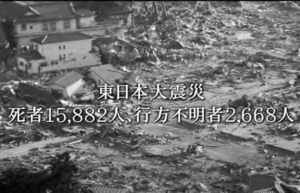
missing. Source: Screen capture from Live Your Dream: The Taylor Anderson Story.
Lucien: In watching the documentary, I was hard pressed to remember a film that evoked such a variety of emotions, for me at least. Since you directly interacted with so many people who knew Taylor, a correct answer to this question is impossible, but in making the movie, please reminisce about two to three instances when, individuals in the documentary best captured the major themes of the film.
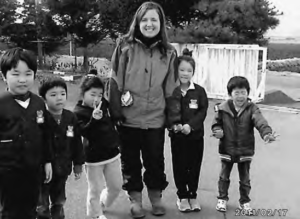
capture from Live Your Dream: The Taylor Anderson Story.
Lucien: What circumstances attracted your attention to the novel Cocktail Party and in turn caused you to make this film?Regge: In 2002, I was awarded a Fulbright Journalist Fellowship to conduct research in Okinawa on what I titled at that time the Will of the People. Okinawa had captured my curiosity in the closing weeks of my Creative Artist Fellowship, so I took a trip there to do scuba diving. Little did I know at that time the seeds that were being planted. Arriving in Naha on my fellowship, I was able to set up interviews with many prominent Okinawans, including the late Governor Ōta. My academic home was the University of the Ryūkyūs, and Katsunori Yamazato was part of the faculty there at that time; he introduced me to the work of Tatsuhiro Oshiro and his Akutagawa Prize-winning novella Cocktail Party. It was one of the stories in a collection titled, “Southern Exposure” and to me, the one story that so accurately captured the complicated relationship of the US Military and the Okinawan people.
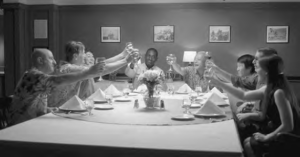
Lucien: Cocktail Party, in my opinion, is a good story, so good that spoiler alerts are not going to happen on my part. At the same time, the movie appears to almost have the quality of a documentary as well. I admit that after watching the movie for the first time, I learned of similar reactions from others who’ve seen the movie. How did you manage to get these kinds of responses from viewers?
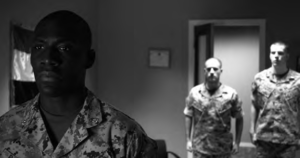
Lucien: Cocktail Party caused me to reflect upon contrasting perspectives, of Okinawan’s, Japanese, and members of the US military, as well as to consider issues of race, ethnicity, and class, and empathize the uncertainties and ambiguities literally every character in the film experiences in their decisions. The movie seems powerful but not didactic and “preachy.” Any responses to this viewer’s take?Regge: I am honored that you picked up on the fact that the film is not didactic or preachy, which would have been the hallmark of an antibase movie. My intention and the intention of the cast and everyone who worked on the film was to find the humanity and the truth in each character. That is why I feel the film resonates with audiences. The characters in the film are not the archetypes of the “Okinawan problem” often portrayed by both the Japanese and US media in their coverage of Okinawa. The people in the film are the men and women of Okinawa, mainland Japan, and members of the armed forces based there. The interactions of these three communities and their interests are not simple and easy. Okinawa has recently become a very popular destination for mainland Japanese to live, but what many mainlanders find is that even though both communities are Japanese based on nationality and standard language, their cultures are very different. Add to this mix military base personnel on a tour of duty maybe for only eighteen months, and the many members of the US military who by marriage are now part of the fabric of society in Okinawa, with as the term implies,“Double” children. Creating a contemporary story, we wanted to introduce audiences to a more complicated and nuanced atmosphere in Okinawa, and I think based on screenings and audience response, we’ve been successful in our mission. May 2022 will mark the fiftieth anniversary of the return of Okinawa to Japan, so we are hoping more institutions will make Cocktail Party the movie and the original novella vital parts of the teaching surrounding this historic milestone, enabling students and educators to understand more about the ongoing situation of the people of Okinawa and the US military in Japan’s southernmost islands.
Lucien: Regge, thanks for the interview!