
Teaching Chinese Elite Politics through Li Qiang, Premier of the People’s Republic of China
by Eduardo Accorroni
Download the PDF version of this article for classroom use
Eduardo Accorroni is a PhD student in Teaching & Learning Sciences at the University of Macerata in Italy (PhD cycle XL, 2024–2027). His research explores how Chinese culture is taught in Italian upper secondary schools (ages 14–19). He holds a master’s degree in Languages, Cultures, and Literary Translation, earned with honors. He has studied and conducted research in China. His academic interests include Chinese politics, contemporary history, and the role of culture in education.
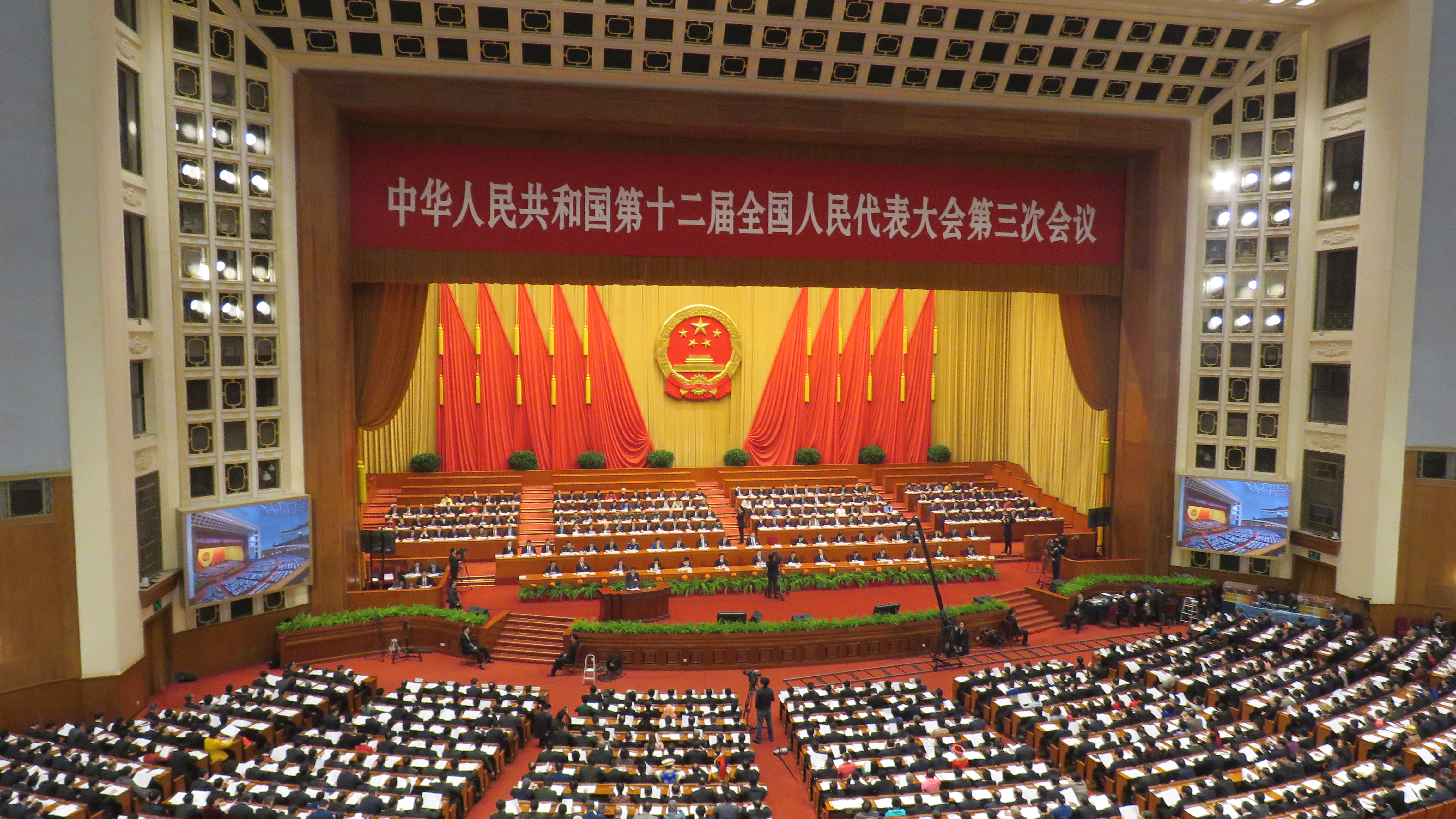
The Great Hall of the People in Beijing, People's Republic of China. Wikimedia Commons.
Guanxi, Meritocracy, and Leadership Selection in the PRC
Li Qiang’s rise to the position of Premier of the People’s Republic of China offers a useful entry point for examining how leaders are selected in contemporary China. His career is more than a conventional political biography: it shows how experience in local government, personal trust, political loyalty, and institutional evaluation can all shape advancement within the Chinese Communist Party (CCP).
Li’s trajectory brings together several themes central to understanding modern China: elite recruitment, economic management, crisis governance, and China’s changing international role. Before becoming Premier in 2023, Li held senior posts in Zhejiang (a province in eastern China), Jiangsu (a coastal Chinese province north of Shanghai), as well as in Shanghai—three key stages in his path toward national office. These experiences show how provincial and municipal governance can function as a testing ground for national leadership.
Li’s close working relationship with Xi Jinping, the paramount leader of China and General Secretary of the CCP, especially during their years in Zhejiang, makes the concept of guanxi particularly relevant. Guanxi refers to networks of personal relationships shaped by trust, obligation, reciprocity, and long-term mutual dependence. In Li’s case, however, guanxi should be understood alongside—not instead of—administrative experience, institutional evaluation, and broader Party priorities.
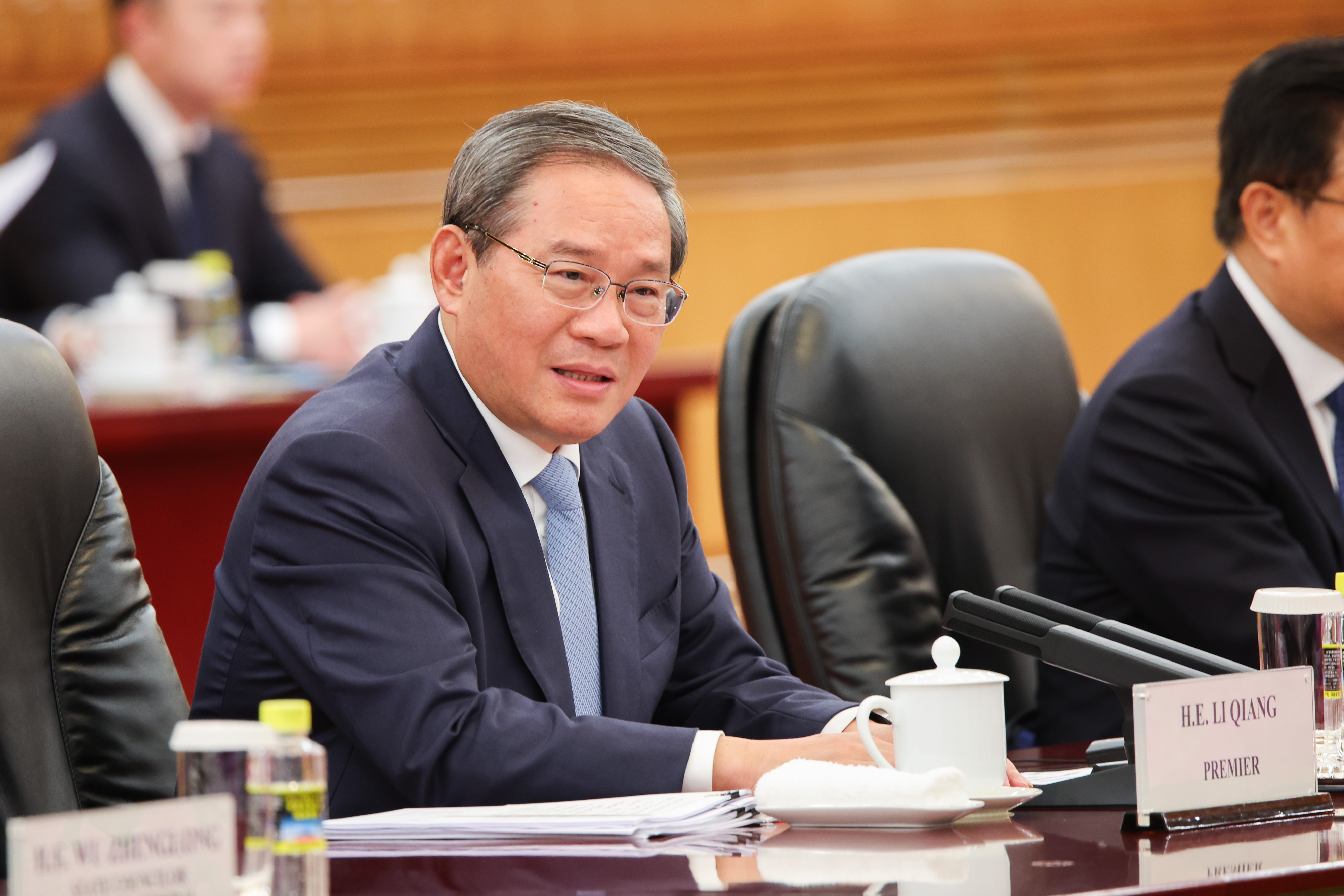
Figure 1: Li Qiang, Premier of the People’s Republic of China, 2025. Wikimedia Commons
Local Governance as Political Training
Li Qiang’s path to national leadership began in Zhejiang, the coastal province where he was born in 1959 and where he spent much of his early political career.1 After studying agricultural mechanization at Zhejiang Agricultural University, he entered local administration and the Communist Youth League, a common training ground for young Party cadres. His early career illustrates how the Chinese Communist Party often promotes officials through a sequence of local and provincial posts before they reach national leadership.
In 2002, Li was appointed Party Secretary of Wenzhou, a prefecture-level city in Zhejiang Province known for its strong private economy and entrepreneurial culture. This post exposed him to the challenges of governing a dynamic local economy, including the relationship between Party authority, private enterprise, and economic growth.
Li’s years in Zhejiang were also important because they overlapped with Xi Jinping’s tenure as Zhejiang provincial Party Secretary from 2002 to 2007. From 2004 to 2005, Li served as Secretary-General of the Zhejiang Provincial Party Committee, a position that placed him in close working contact with Xi. This relationship later became central to outside interpretations of Li’s political rise, but it should be understood alongside his administrative experience and subsequent promotions.
After Zhejiang, Li held increasingly senior posts in Jiangsu and Shanghai. In 2016, he became Party Secretary of Jiangsu, and in 2017 he was promoted to Party Secretary of Shanghai, one of China’s most important municipal leadership positions. These appointments illustrate how major provincial and municipal roles can serve as tests of administrative capacity before officials move to the national level.2
Shanghai as a Case of Economic and Crisis Governance
Li Qiang’s appointment as Party Secretary of Shanghai in 2017 marked an important stage in his career. Shanghai is China’s financial center and one of the country’s most internationally connected cities, making it a major test of political and economic management. In this role, Li was expected to support economic growth and foreign investment while maintaining Party authority over one of China’s most complex urban environments.
The Tesla Gigafactory became one of the most visible examples of this approach. Opened in 2019, at a time of growing tensions between China and the United States, it was Tesla’s first overseas factory and a symbol of Shanghai’s continued effort to attract global companies.3 The project shows how local governments in China can compete for foreign investment while remaining embedded within the priorities of the central Party-state.
Shanghai’s 2022 COVID-19 lockdown became the most controversial episode of Li’s tenure in the city. From late March to early June 2022, the municipality imposed strict restrictions, mass testing, and residential controls on much of its population of roughly 25 million people. The lockdown exposed important weaknesses in crisis governance, including dependence on digital systems, uneven access to services, logistical bottlenecks, disruptions to daily life, and the difficulty of balancing public health with economic activity.4
At the same time, Shanghai illustrates both the capacity and the limits of authoritarian crisis management. The COVID-19 case showed how Chinese local governments could mobilize resources quickly and combine strict social controls with selective efforts to protect strategic economic sectors. Li’s subsequent promotion to Premier in 2023 raises an important question: how does the Chinese Communist Party evaluate local leaders after controversial episodes of governance? In Li’s case, this question points back to the article’s central tension: the relationship between administrative performance, political reliability, personal trust, and advancement within the Party.
Li’s experience in Shanghai strengthened his national profile within the Chinese Communist Party. At the 20th National Congress in October 2022, he was elevated to the Politburo Standing Committee, and in March 2023 he became Premier of the People’s Republic of China.5 His promotion illustrates how experience in major provincial and municipal posts can prepare officials for national leadership, while also showing the importance of political trust at the highest levels of the Party.
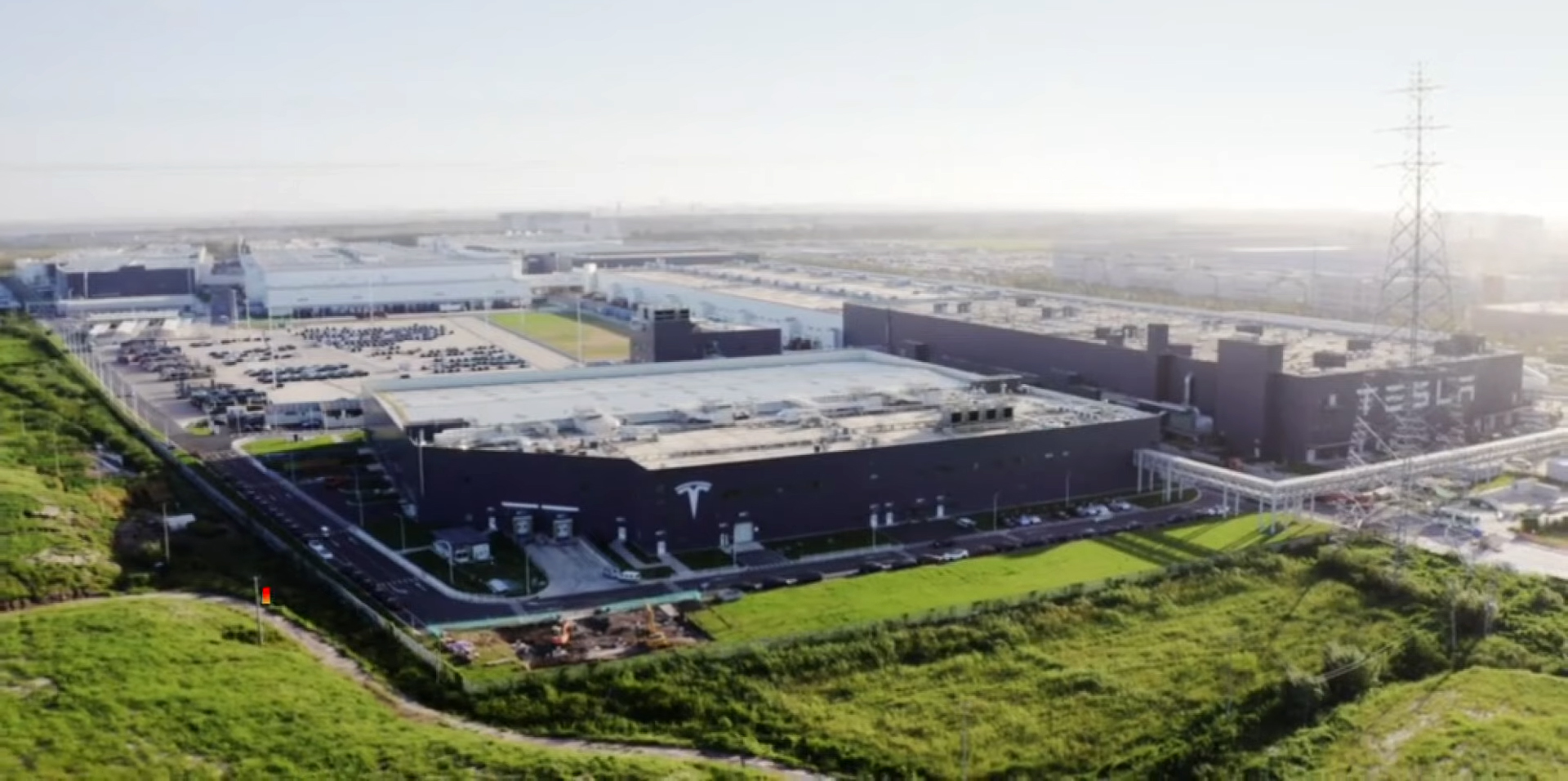
Figure 2. Aerial view of Tesla Gigafactory Shanghai, 2023. Wikimedia Commons.
Meritocracy, Guanxi, and Promotion within the CCP
Li’s elevation was unusual by recent Chinese political standards. Unlike previous premiers of the reform era, he had not previously served as a Vice Premier or held a senior post in the central government before reaching the top level of state leadership. At the 20th Party Congress in October 2022, Li was promoted to the Politburo Standing Committee; in March 2023, he became Premier of the People’s Republic of China.
Many observers interpreted Li’s promotion as evidence of Xi Jinping’s preference for trusted political allies in key governing positions.6 At the same time, his appointment should not be explained only through personal loyalty. It also reflected his long experience in local and provincial administration
Li’s rise raises an important question: how should we understand the relationship between meritocracy, performance, personal trust, and political loyalty in the CCP’s promotion system? Some analysts argue that his appointment weakened the Party’s claim to select leaders through institutionalized meritocratic procedures. Others point to his record in economically important regions as evidence that administrative experience still mattered. The debate itself is useful because it shows that leadership selection in China cannot be reduced to a single factor.
The Chinese Communist Party has long emphasized performance-based promotion as an important part of its cadre management system. Through cadre evaluation mechanisms, officials may be assessed according to goals such as economic growth, resource management, social stability, and implementation of central policy.7 In practice, however, promotion within the Party is shaped not only by measurable performance, but also by political reliability, personal trust, factional relationships, and alignment with the priorities of top leaders.
Li Qiang’s rise illustrates this tension. On one hand, his career has included major leadership roles in economically important regions such as Zhejiang, Jiangsu, and Shanghai. On the other hand, his close relationship with Xi Jinping made his promotion appear to many observers as part of a broader shift toward political loyalty and personal trust at the highest levels of the Party. Rather than treating Li’s appointment as evidence of either pure meritocracy or simple favoritism, it is more useful to see it as a case in which administrative experience, political alignment, and personal ties are interconnected.
Li Qiang on the World Stage
Since becoming Premier in 2023, Li Qiang has taken on a more visible international role, especially in settings focused on economic cooperation, regional diplomacy, and global governance. His appearances at meetings such as the 2023 G20 Summit in New Delhi and the 2024 China-Japan-South Korea Trilateral Summit in Seoul illustrate one of the Premier’s traditional responsibilities:8 representing China’s economic and diplomatic priorities abroad when the top leader is absent or when the agenda centers on trade, investment, and development.9
Li’s international appearances have often focused on economic cooperation, trade, infrastructure, and technological exchange. Through forums and meetings connected to the Belt and Road Initiative, he has helped present China as a partner in development and connectivity. At the same time, his role should not be overstated. Li does not define China’s foreign policy independently from Xi Jinping; rather, he communicates and implements the economic priorities of the top leadership.
For readers trying to understand Chinese leadership, this distinction matters: Li’s international profile shows both his importance as Premier and the limits of his authority within a system centered on Xi.
Leadership Selection and the Question of Succession
Li Qiang’s rise also helps introduce one of the most difficult questions in contemporary Chinese politics: how leadership succession works when formal rules, institutional norms, and personal authority do not always point in the same direction. Xi Jinping’s third presidential term, confirmed in March 2023 after the abolition of presidential term limits in 2018, marked a break with the expectation that China’s top state leader would serve no more than two terms.10 Yet the presidency is only one part of China’s leadership structure. In practice, Xi’s roles as General Secretary of the Chinese Communist Party and Chairman of the Central Military Commission are more central to political authority.
Li should therefore not be presented simply as Xi’s likely successor. Since Xi has not designated a clear heir, observers debate whether future leadership transitions will follow earlier institutional patterns or depend more heavily on personal authority and elite bargaining. Li’s position as Premier gives him visibility and influence, especially in economic governance, but it does not automatically place him next in line for supreme leadership. Future succession politics will likely depend on several factors: seniority, administrative experience, political loyalty, elite bargaining, and the preferences of the Party’s most powerful figures, especially Xi Jinping and members of the CCP leadership.
The value of Li’s case lies less in predicting China’s next leader than in showing how leadership selection in the CCP involves a complex interaction of administrative experience, political loyalty, personal trust, and institutional procedure. This uncertainty is itself instructive: it reveals how difficult it can be to separate formal titles, informal authority, and personal networks in the study of Chinese elite politics.
Li Qiang’s career does not provide a simple answer to the question of how leaders are selected in China. Instead, it shows why the question itself is complex. His rise reflects administrative experience, local governance, economic management, personal trust, and political loyalty. For readers new to Chinese politics, Li’s case offers a concrete way to examine how formal institutions and informal relationships interact within the Chinese Communist Party. This makes his career noteworthy not simply as the story of one political figure, but as a window into the changing logic of power in contemporary China.
Notes
1 “Brief introduction of Li Qiang, Premier of China’s State Council,” State Council of the People’s Republic of China, March 12, 2023.
2 Cheng Li, “Li Qiang 李强,” Brookings Institution, October 20, 2022.
3 “Tesla Gigafactory Shanghai,” Most Influential Projects 2020, Project Management Institute.
4 “After two months, a scarred Shanghai’s COVID-19 lockdown ends,” Reuters, June 1, 2022.
5 “Communique of the first plenary session of the 20th CPC Central Committee,” Xinhua, October 24, 2022.
6 Neil Thomas, “Li Qiang’s Quiet Rise: Why China’s Premier Matters Again,” ChinaFile, June 4, 2025.
7 Ning Leng, “Tournament-Style Bargaining within Boundaries: Setting Targets in China’s Cadre Evaluation System,” The China Quarterly 246 (2021).
8 “Li Qiang Attends and Addresses the First Session of the 18th G20 Summit,” Ministry of Foreign Affairs of the People’s Republic of China, September 9, 2023.
9 “Japan-China-ROK Trilateral Summit,” JapanGov, July 26, 2024.
10 “Xi clinches third term as China’s president amid host of challenges,” Reuters, March 10, 2023.
Classroom Resources
Key Concepts and Definitions
BRICS: An intergovernmental grouping originally formed in 2009 by Brazil, Russia, India, China with South Africa joining in 2010, later expanded to include additional members. It promotes cooperation on economic development, trade, and global governance reform.
Cadre Evaluation: The system through which Party and government officials are assessed according to criteria such as economic performance, policy implementation, social stability, and political reliability.
Communist Youth League: The youth wing of the Chinese Communist Party, functioning as a training ground for future Party cadres.
Guanxi: Networks of personal relationships based on trust, reciprocity, obligation, and long-term mutual dependence. In Chinese political and business contexts, guanxi can shape access, cooperation, and advancement, but it should not be reduced to simple favoritism.
Premier: The head of China’s State Council and the official primarily associated with government administration and economic policy, while operating within the authority of the Chinese Communist Party leadership.
Tesla Gigafactory: Tesla’s electric vehicle manufacturing plant in Shanghai, a symbol of industrial cooperation between China and foreign enterprises.
Zero-COVID Lockdown: A strict public health measure imposed to contain the spread of the virus, involving movement restrictions and limitations on daily life.
20th National Congress of the CCP: The 2022 Party Congress at which Xi Jinping secured a third term as CCP General Secretary—breaking with the recent two-term leadership norm—and Li Qiang entered the Politburo Standing Committee.
Suggested Courses
Comparative Government or Comparative Politics: A unit on leadership selection, elite recruitment, meritocratic claims, political loyalty, and personal networks in authoritarian and democratic systems. Li Qiang’s career can be used as a case study for comparing how different political systems identify, test, and promote leaders.
Contemporary China/Modern China: A concluding module on current debates about China’s political future, including succession politics, the role of Xi Jinping, and the question of what may come next for China’s leadership.
World History, Global Studies, or International Relations: A unit connecting China’s domestic political structure with economic globalization, foreign investment, infrastructure diplomacy, and China’s international role.
Asian Studies/East Asian Studies: An introductory module on contemporary Chinese politics for students with little prior knowledge of the PRC leadership system.
Learning Objectives and Assessment Strategies
After reading the article, students should be able to answer the following questions:
-
How does Li Qiang’s career illustrate the importance of local governance experience in the CCP leadership pipeline?
-
What is guanxi, and how does it differ from simple favoritism or Western-style professional networking?
-
How do administrative performance, political loyalty, personal trust, and institutional evaluation interact in the CCP promotion system?
-
Why is the Shanghai COVID-19 lockdown an important case study for understanding crisis governance in contemporary China?
-
How does leadership selection in the People’s Republic of China differ from leadership selection in electoral democracies?
Assessment may include a short response on whether Li’s rise is better explained by meritocracy, loyalty, guanxi, or a combination of factors; a comparative paragraph on CCP leadership selection and electoral democracy; a brief source analysis of media coverage on Li’s promotion; or a reflection after the “Appointing the Next Premier” simulation below.
Teaching Activity: Simulating Leadership Selection
Case Study Simulation: “Appointing the Next Premier”
Divide the class into five groups. Each group receives a role card representing one criterion in CCP leadership selection: administrative performance, political loyalty, provincial experience, personal trust/ guanxi, or international profile. Students then evaluate a set of candidate profiles, including Li Qiang, and argue which candidate should become Premier. Each group must explain which criteria it values most and how its decision reflects the internal logic of CCP promotion.
Debrief Questions: Which factor mattered most: performance, loyalty, experience, guanxi, or international profile? How does this process differ from leadership selection in electoral democracies? What does the simulation reveal about the strengths and limits of meritocratic claims in authoritarian systems? How might a crisis such as the Shanghai lockdown affect a candidate’s evaluation?