
Engaged Buddhism: A Primer on Awakened Action in the Modern World
by Pamela D. Winfield
Download the PDF version of this article for classroom use
Pamela D. Winfield, Ph.D. (she/her) is Professor of Buddhist Studies in the Department of Religious Studies at Elon University in NC. She is the author of Icons and Iconoclasm in Japanese Buddhism: Kūkai and Dōgen on the Art of Enlightenment (Oxford University Press, 2013) which won the AAS-SEC Book Prize in 2015. She is also the co-editor (with Steven Heine) of Zen and Material Culture (Oxford University Press, 2017), The Religious Body Imagined (Equinox Press, 2024), and four special journal issues. Her other sponsored research on the visual, material, and corporeal cultures of Japanese Buddhism has appeared in numerous scholarly publications. Most recently, she served as the Numata Visiting Professor of Buddhist Studies at McGill University.
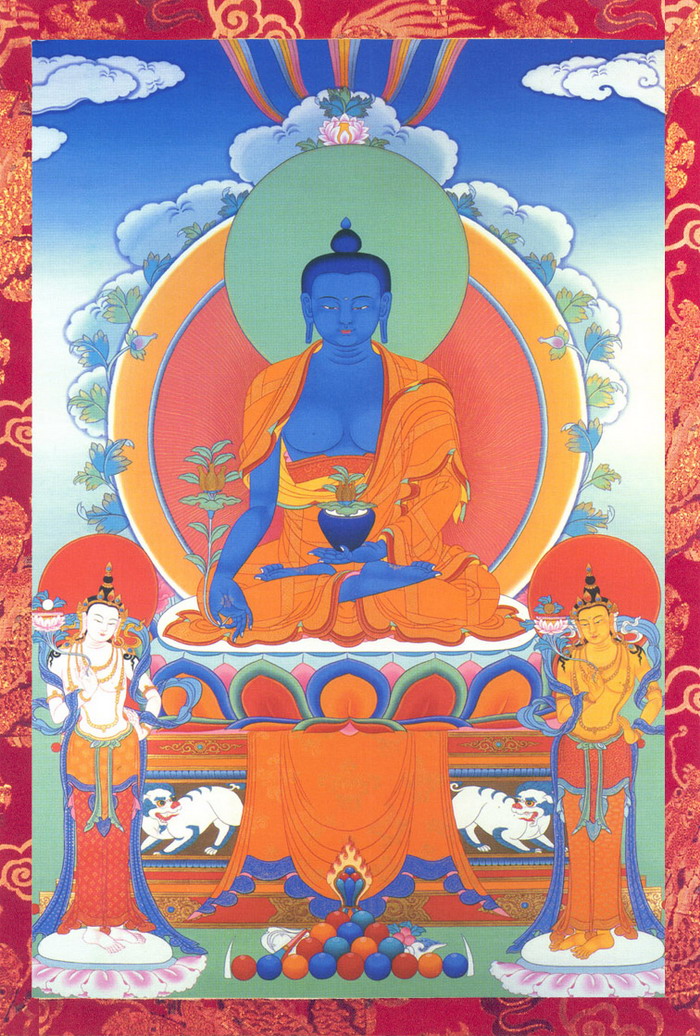
Figure 1. Bhaiṣajyaguru (The Healing Medicine buddha) with Sunlight Bodhisattva and Moonlight Bodhisattva. Unknown artist. Wikimedia Commons.
Introduction
Siddhartha Gautama, known as The Buddha or The Awakened One, lived in present-day India from the sixth to the fifth century BCE. His teachings of the Four Noble Truths and the Eightfold Path were designed to alleviate the suffering that we unnecessarily cause ourselves and others due to our self-centered desires, as we unreasonably tend to cling to transient possessions, avoid inevitable loss, and ignore the fundamentally interdependent nature of existence. However, through ethical conduct and calm meditative insight, Buddhists seek to cultivate the core principles of wisdom and compassion to act effectively amid ever-shifting, interconnected circumstances.
These core principles and practices developed over time into the classical Indian tradition of Theravāda Buddhism in South/Southeast Asia, and into the later forms of Mahāyāna Buddhism that entered into Central and East Asia via the Silk Road. However, in the modern period, Engaged Buddhism emerged as a truly global phenomenon that has applied core Buddhist principles to the present-day challenges of environmental, economic, political, and social injustice worldwide. Since the1960s, when the Vietnamese monk and anti-war activist Thich Nhat Hanh (1926–2022) first coined the term, Engaged Buddhism has been broadly understood to be a distinctly modern reform movement within Buddhism. However, this short introduction will demonstrate the continuities between premodern and Engaged Buddhist teachings and practice. It will show how these modern practitioners draw on ancient Buddhist doctrines to address contemporary concerns.
This article is organized into five thematic subtopics: (1) Physical Health and Wellbeing; (2) Wealth & Poverty Alleviation; (3) Environmental Activism; (4) Conflict Resolution; and (5) Gender Equality. A glossary, sample questions, and suggested assignment ideas are also included. In this way, this primer will connect Buddhist doctrine and history with some of its modern-day applications, and it will demonstrate that the wisdom and compassion born from mindful contemplation and moral action have always been—and continue to be—of timeless relevance on both the individual and societal levels.
Physical Health & Wellbeing
When the Buddha ventured out of his palace as a young man and encountered old age, sickness, and death for the first time, he vowed to find the cause and the cure for the human condition. He accordingly structured his teaching of the Four Noble Truths and the Eightfold Path according to a medical model:
-
he diagnosed the inevitable problem of suffering
-
he identified its etiology (the cause of a disease), namely selfish desires
-
he offered a good prognosis (i.e., there is a cure, called nirvana, when desiring ceases)
-
he outlined an eight-step therapy to achieve this and alleviate suffering:
-
WISDOM: (1) right understanding (2) right intention
-
MORALITY: (3) right speech (4) right action (5) right livelihood
-
MEDITATION: (6) right effort (7) right mindfulness (8) right concentration
-
In addition, the so-called Three Jewels of Buddhism use a similar medical analogy. The Buddha is like a great doctor, his Dharma teaching is like medicine, and the Sangha community of Buddhist practitioners is like the hospital staff who help heal our physical and mental dis-ease. As a result, Buddhism has often been associated with healing the body-mind complex throughout Asian history.
In the premodern period, healing rituals, protective amulets, and traditional herbal medicines were often dispensed from temple clinics and hospices. Monks themselves often discovered the pharmacological properties of plants and trees, and they traveled to court to cure kings and empresses as well as people throughout the countryside. In Thailand, Theravāda Buddhists have traditionally venerated the Buddha’s physician Jivaka, whereas in Mahāyāna countries—like China, Japan, South Korea, Taiwan, Vietnam, and the Tibetan cultural sphere—they have typically prayed to the Healing Buddha holding a medicine jar in his hand (Figure 1). These images embody the Buddhist principles of compassionate care and the use of what Buddhists call “expedient means,” that is, applying the appropriate cure for each particular ailment or situation.
In the modern period, Engaged Buddhists have responded to public health crises in numerous ways. In Taiwan, the Tzu Chi (“Compassion-Relief”) Foundation began in 1966 by building free medical clinics and hospitals into the 1970s and 1980s and today it also contributes to humanitarian disaster relief efforts overseas. In Japan, old and new Buddhist sects rapidly responded to the 3-11-2011 triple disaster of earthquake, tsunami, and the Fukushima nuclear reactor meltdown by fundraising, organizing and delivering relief supplies, and sheltering homeless families in temples.1 During the 2020 coronavirus pandemic, Buddhist temples in Singapore, Japan, Thailand, Canada, and America made and distributed masks, fundraised online and through social media, redistributed food donations, and informed their communities about proper hygiene, cleaning, and social distancing. In Nepal, the small grassroots Bodhi Institute distributed food packets when other large-scale international Buddhist temples closed their doors. And in China, Buddhist temples promoted vegetarianism, qigong exercise, and Traditional Chinese Medicine to boost the immune system and treat symptoms.2 In these ways and others, Engaged Buddhists strive to meet the physical and psychological needs of their communities.
Wealth and Poverty Alleviation
The Buddha was a wealthy Indian prince who renounced his throne and voluntarily lived in the forest for six years without any material possessions. At the end of that time, however, he realized that neither excessive wealth nor extreme poverty brings liberation. As a result of his life experiences, he taught instead what he called the “Middle Path” of moderation and balance between any two extremes. As a result of his teachings, Buddhism has appealed to people of all social ranks, from kings to merchants to those at the bottom of the social ladder.
Traditionally, Buddhism teaches that one’s present life circumstances are largely determined by one’s past actions (karma).3 Practitioners believe that one’s actions and their inevitable effects (which in turn become the new causes of new consequences) accumulate over countless previous reincarnations, endlessly planting wholesome and unwholesome seeds in our karmic makeup. When these inherited karmic seeds (bija) come to fruition, people will either enjoy wealth, health, and good fortune, or their unwholesome seeds will manifest as misfortune. This botanical model essentially means that the seeds of one’s positive and negative actions are constantly regenerating the cycle of reincarnation, perpetuating both the joys—and the suffering—that life inevitably involves.
Importantly, however, the Buddha emphasized the impermanence of these states and stated that the wise, compassionate intention (cetana) behind the volitional act is most important. As a result, setting the wholesome intention to help others in this lifetime was believed to mitigate and even help neutralize one’s negative past karma. The wealthy were therefore encouraged to donate as long as their fortunate circumstances lasted in this lifetime, for one day they too might be suffering greatly and equally deserving of compassion. A system of “karmic exchange” thus developed, where lay practitioners of selfless generosity (dāna) would obtain karmic merit in exchange for their material support of the Sangha, who in turn helped the needy. Buddhist monasteries and convents throughout Asian history functioned as the premodern equivalents of today’s hospitals, pharmacies, food pantries, schools, orphanages, retirement homes, funeral homes, and sanctuaries for widows or domestic abuse survivors.
In the modern period, Engaged Buddhists like members of Thich Nhat Hanh’s “Order of Interbeing” have expanded the scope and scale of karmic causality by building upon the Buddha’s teaching about the interdependent “co-arising of phenomena” (pratītya-samutpāda). They recognize that suffering is not simply caused by personal desires and individual actions, but also by the collective greed and external actions of large-scale societal structures and economic practices. They acknowledge that there are interconnected causes and conditions that are beyond any single individual’s personal control, and they take aim at the systemic injuries and injustices that our collective karma has perpetuated especially among the weak and vulnerable. Modern Engaged Buddhist activists have therefore responded to economic disparities in numerous ways.
For example, the Indian economist, social reformer, and statesman B.R. Ambedkar (1891–1956) was born into the poor and oppressed caste of Dalits (“untouchables”) at the very bottom of the social ladder in India.4 Ambedkar was influenced by the Buddha’s teachings and by the Hindu social activist Jyotirao Phule (1827–1890) pictured below (Figure 2), but Ambedkar ultimately took refuge in Buddhism because he concluded that the Buddha’s teachings rejected the caste system entirely. In the 1950 Indian Constitution that officially outlawed caste discrimination, Ambedkar established significant legal rights and policy reforms for Dalits that significantly improved their quality of life, though discrimination does still persist today. Millions of Dalits followed his example and took refuge in Buddhism as well.
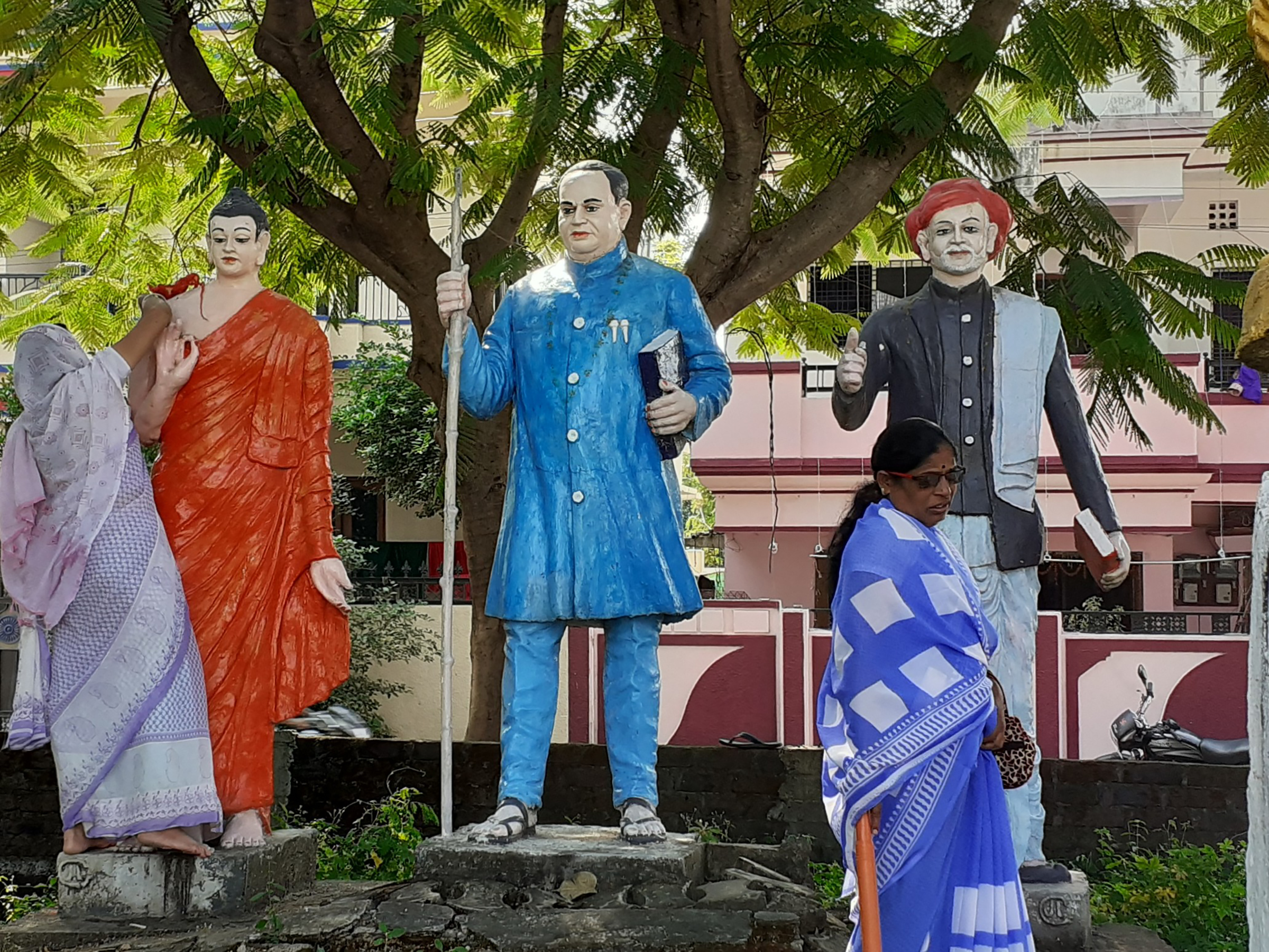
Figure 2. Women cleaning statues of Buddha, Dr. Ambedkar, and Mahātmā Phule at a Buddha vihar in Nagpur, Maharashtra state, India. November 12, 2019. Wikimedia Commons.
In Sri Lanka, the Engaged Buddhist A.T. Ariyaratne (1931–2024) began developing a new economic model for village life in the late 1950s. He called it the Sarvōdayan Sramādanā Movement, which translates into “welfare for all through shared labor.” Inspired by the teachings of both Gandhi and the Buddha, his collectivistic ideal has brought prosperity, peace, and self-governance to many low-income villages. They are now part of the Global Ecovillage Network.
In Thailand, Sulak Śivarakṣa used the Four Grounds of Kindness and a modern interpretation of Five Precepts to criticize corporate greed: (1) “No Killing” means not depriving people of their livelihoods; (2) “No Stealing” means opposing exploitative economic policies or development projects that rob people of their land; (3) “No Sexual Misconduct” means working to restructure the economic forces that have created the prostitution industry in Thailand; (4) “No Lying” means promoting truth in advertising and limiting the media messages that consumption leads to happiness; and (5) “No Intoxicants” means overcoming the socio-economic disparities that cause despair and addiction.5
Finally, the small Buddhist country of Bhutan has redefined what it truly means to be rich in life. Most countries measure wealth by the standard Gross National Product (GNP), which is a country’s value of goods and services plus foreign investments in a year. However, in 1998 Bhutan proposed to the United Nations the Gross National Happiness (GNH) factor instead. This new Buddhist-inspired metric assesses individual and national wellbeing according to nine key factors: (1) psychological well-being; (2) physical health; (3) time use (i.e., work-life balance); (4) education; (5) cultural diversity and resilience; (6) good governance; (7) community vitality; (8) ecological diversity and resilience; and (9) living standards. It has been adopted by the United Nations as a key index for sustainable development worldwide.6
Environmental Activism
Buddhists have a great respect for the natural world. Every major episode in the Buddha’s life took place in nature, from his birth in Lumbini Grove, to his enlightenment under the bodhi tree at Bodh Gaya and his death among the sala trees of Kushinagar. In classical Theravāda Buddhism, the forests, trees, and woods of India and Southeast Asia were considered to be power spots for meditation. In the Mahāyāna Buddhism of Central and Northeast Asia, power spots for Daoist and Buddhist training tended to be located in remote mountains and highland peaks (e.g. Shaolin Temple in Henan China, the seven Sansa mountain temples of South Korea, and the monastic complexes of Mt. Hiei and Mt. Kōya in Japan are but a few examples). This is why Zen temples today in East Asia are still referred to as “mountains” even when located in or near urban centers. The surrounding environment has been appreciated and celebrated in Buddhist literature, poetry, and the visual arts throughout the ages (Figure 3).
Buddhism teaches that everything is interdependent and interconnected. The “dependent arising” of forms is a fundamentally systems-oriented teaching that recognizes that everything in the universe only comes into being and passes away because of other causal factors. Because the web of existence depends upon the actions of everyone and everything within it, we should not “poison the well” upon which we rely. Instead, we should treat the ecosystem of which we are a part with respect, care, appreciation, and gratitude.
In the modern period, Engaged Buddhists have tackled the environmental crisis head-on. The Thai monk Buddhadāsa (1906–1993) established the Garden of Liberation (Suan Mokkh) forest monastery in 1932. He believed that living amidst nature ”cools down” selfish desires that invariably cause suffering for oneself and others. His student Sulak Śivarakṣa established the International Network of Engaged Buddhists (INEB) in 1989 and criticized the corporate greed that is destroying the environment and the farming and fishing industries in Thailand that depend on it. Since the late 1980s, furthermore, Theravāda monks in Thailand and Sri Lanka have been “ordaining” trees to prevent de-forestation. They ritually bless the trees and dress them in monks’ robes, wrapping each individual tree trunk with saffron-colored cloth. Because monks are highly respected in Asia, no one dares to cut down even wooden members of the Sangha.
In addition, engaged Buddhists in Mahāyāna countries routinely reduce, reuse, and recycle on a daily basis. For example, at Taiwan’s Four Great Mountain monasteries of Engaged Buddhism (namely, Tzu Chi, Fo Guan Shan, Dharma Drum and Chung Tai), the monks and nuns are strict vegetarians and are expected to use reusable chopsticks and water bottles. Tzu Chi actually uses recycled plastic water bottles to produce critical disaster relief materials (e.g. blankets, t-shirts, and thermal underwear), while Dharma Drum conserves water by using collected rainwater for its latrines.
Finally, His Holiness the Dalai Lama (b. 1935) has also maintained that a clean environment is a basic human right. As the spiritual leader of the Tibetan people and a Nobel Peace Prize laureate, he has consistently spoken out against the interrelated problems of deforestation, mining, meat production, water pollution, and human overpopulation worldwide.
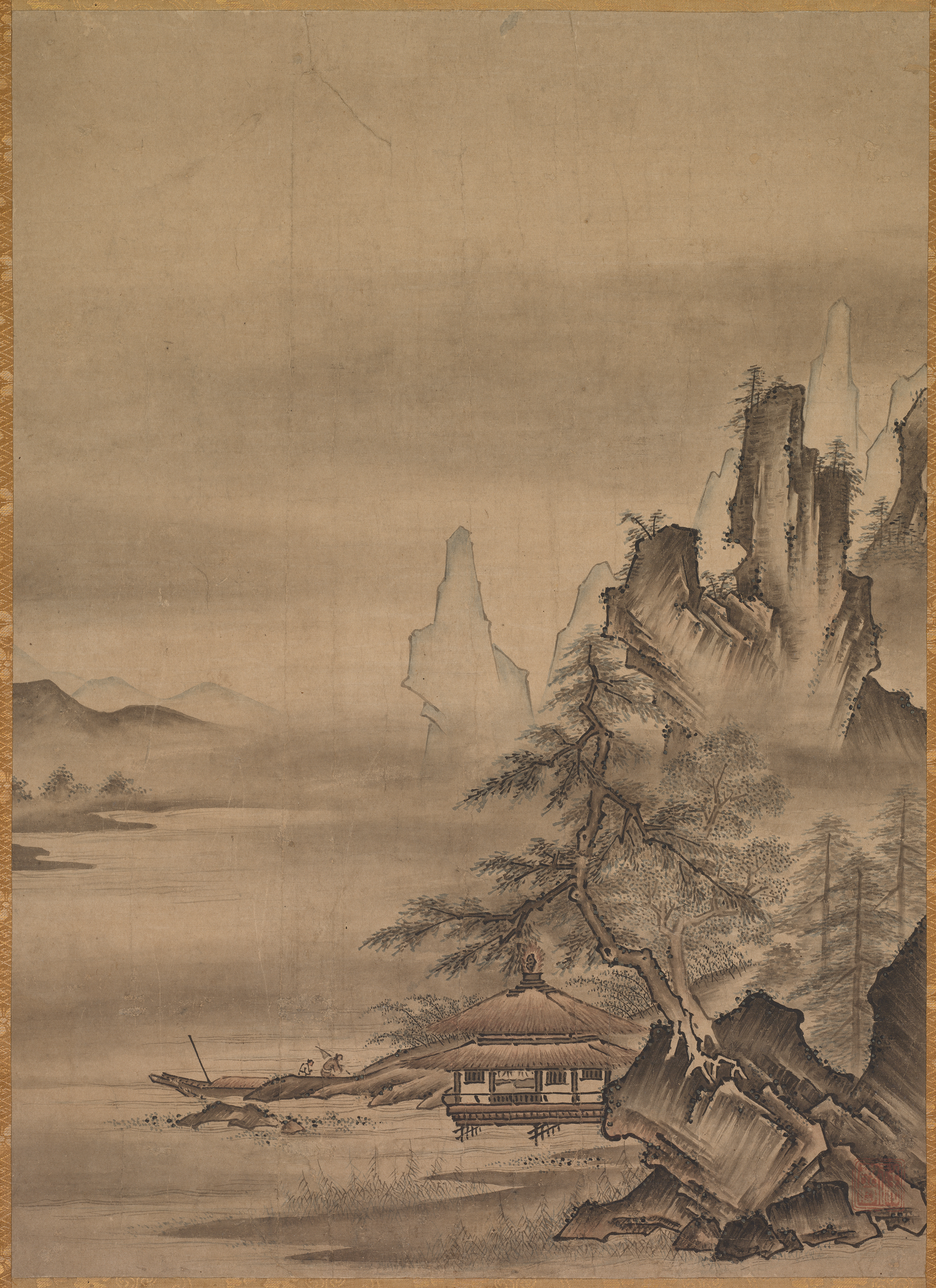
Figure 3. “Returning Home” Zen mountain landscape. Attributed to Zen painter-monk Shōkei, mid-1500s. Cleveland Museum of Art. Wikimedia Commons.
Conflict Resolution
Buddhist teachings on conflict resolution essentially point out that cutting off the fuel of hatred will extinguish the flame of aggression and violence. This is easier said than done, but the Buddha himself modeled how to confront interpersonal conflict and violence without rancor or vengeance, but rather with patience, compassion, and wisdom. For example, when the Buddha’s evil cousin Devadatta tried to assassinate him and cause a schism in the early Buddhist Sangha, Buddha calmly pacified the enraged elephant sent to kill him and wisely made Devadatta’s strict form of asceticism optional, thus establishing a Middle Path of moderation, balance, and non-extremism. Devadatta’s morality tale appears in early Theravāda texts called the Vinaya, which also outline monastic regulations such as the repentance rituals designed to mitigate karmic harm and restore trust within the Sangha. The story of Devadatta also appears in a later Mahāyāna scripture known as The Lotus Sūtra, which recounts his virtuous past lives to demonstrate that even an archetypal evildoer has Buddha-potential. Perhaps the most famous historic example of Buddhist conflict resolution is the Indian King Aśoka (r. 256–238 BCE), who regretted the particularly bloody Battle of Kalinga in 261 BCE. He thereafter embraced Buddhist pacifism and modeled enlightened rulership, which incidentally included environmental decrees).
The Buddhist (and Jain) ethic of a-himsa or non-violence has likewise inspired modern-day political and spiritual leaders such as Mahātmā Gandhi (nominated five times for the Nobel Peace Prize), Dr. Martin Luther King Jr. (Nobel laureate 1964), and Nelson Mandela (Nobel laureate 1993). In terms of Engaged Buddhists specifically:
-
Thich Nhat Hanh was nominated for the Nobel Peace Prize in 1967 by Dr. Martin Luther King Jr. for his peaceful protest of the Vietnam War. After forty years of living in exile in France, he was finally able to return to Vietnam in 2018 to live out his last days in peace (d. 2022).
-
The Dalai Lama received the Nobel Peace Prize in 1989 for his nonviolent re-sponse to the 1949 Communist invasion of Tibet and his lifelong exile in India starting ten years later. Interestingly, instead of regarding Communist leader Mao Zedong as an enemy, the Dalai Lama views him rather as his “greatest teacher” who compelled him to practice patience and cultivate compassion even for an aggressor.
-
The 1991 Nobel Laureate Aung San Suu Kyi was recognized for her non-violent Buddhist approach to upholding democratic elections and human rights in Myan-mar. She remains an enigmatic figure today, however, due to her controversial handling of the 2017 Rohingya crisis that tarnished her international reputation.7
-
The monk Mahā Ghosananda, who is known as “the Gandhi of Cambodia,” led annual Dhammayietra peace marches across the country as it transitioned to de-mocracy in 1992 after decades of brutal Khmer Rouge rule. He was nominated for the Nobel Peace Prize four times in the 1990s and received the Niwano Peace Prize in 1998.
-
The Venerable Cheng Yen of Taiwan was nominated for the Nobel Peace Prize in 1993 and received the prestigious Niwano Peace Prize in 2007. Her Tzu Chi “Compassion Relief ” Foundation is perhaps most renowned for its humanitarian relief efforts in warzones and natural disaster areas, but its global mission also pro-actively promotes peace through medical care, education, the spread of humanistic culture, and direct charitable assistance.
Naturally, there are important exceptions to Buddhism’s general rule of nonviolent conflict resolution. A clear case in point is the monk Ashin Wirathu’s virulent form of Buddhist ultra-nationalism that fueled the violence against the Rohingya Muslims in Myanmar in 2017 (he and his 969 group have been summarily denounced). A less clear-cut approach to conflict resolution, however, is the self-directed violence of Buddhist monks self-immolating in order to protest the Vietnam War in the 1960s, or what the Dalai Lama calls the “cultural genocide” of Tibet. These monks’ willingness to take on the negative karma of self-harm to draw attention to the larger suffering of their compatriots remains a controversial strategy for conflict resolution. On the whole, however, today’s Buddhist non-governmental organizations (NGOs) such as the International Network of Engaged Buddhists (INEB), the Buddhist Peace Fellowship, and Zen Peacemakers continue to apply Buddhist principles to the peaceful resolution of conflict, social injustice, human rights violations, and other global concerns.
Gender Equality
In premodern Asia, Buddhist monasteries and convents provided great educational opportunities for men and women of all ages and social ranks. Monks and nuns learned to read and write in largely illiterate societies, and both sexes were often considered to be masters of poetry, calligraphy, painting, and music. Male and female clerics might also receive training in medicine and midwifery (for women), and abbots and abbesses alike administered large landholding institutions and managed complex financial affairs.
At the same time, however, the Buddhist record on women’s roles is mixed. Buddhist teachings on female enlightenment are egalitarian in theory, but they have often lacked implementation in male-dominated Asian societies. Blatant gender discrimination became codified in both the Vinaya monastic regulations and the eight additional “rules of respect” (Pali: garudhammas; Skt. gurudharmas; lit. “heavy rules”). For example, according to the Vinaya’s ordination vows of Southeast Asia, male monks (bhikkhu) only have to take 227 vows, but nuns (bhikkhunī) have to take 311, because they are perceived to have more inherent defilements due to menstruation and childbirth. The Vinaya also effectively perpetuates a double standard where only women (not men) who renounce domestic life are seen as threatening to the social order and sexually seductive. The eight additional “rules of respect,” which many scholars believe probably postdate the Buddha’s lifetime, require senior experienced nuns to bow to junior monks “ordained but a day,” for example. The feminist activist and Engaged Buddhist nun Chao-Hwei of Taiwan famously tore up these additional “rules” during a public protest in 2001.
In order to counteract this societal imbalance, Engaged Buddhists have embraced female empowerment as a key component of social justice. The Sakyadhita (“Daughters of the Buddha”) International Association of Buddhist Women strives to re-establish women’s ordination in places where it has historically died out. The Ven. Dhammananda of Thailand, for example, has worked tirelessly to rebuild the female Buddhist Sangha there, and she continues to advocate for the many mae ji female lay practitioners who effectively live as nuns but lack full ordination and equal status to the male monks they often serve. In northern Thailand, fellow feminist nun Ouyporn Khuankaew leads Buddhist workshops to educate, support, and empower women to resist patriarchal models that have historically oppressed them. The Tibetan Buddhist nun Kelsang Wangmo was the first woman to complete the highest PhD-level training in the Gelug tradition. She attained the title of Geshe-ma in 2011 before it was then officially opened to women in 2012. Bhutan began ordaining nuns again in 2022, and in June of 2025, Sri Lanka’s Supreme Court officially ruled that nuns and monks have equal legal status and must be treated accordingly. Furthermore, the Ven. Master Cheng Yen, the female founder of Taiwan’s Tzu Chi order, has joined other Engaged Buddhist sects like Fo Guang Shan in promoting women’s achievement through education and leadership opportunities abroad. In academic circles, leading feminist Buddhist scholars like Karma Lekshe Tsomo and Rita Gross have called for an end to sexism that still causes much suffering in society today, and queer scholars such as Bee Scherer and Hsiao-Lan Hu have further used the Buddhist philosophy of nondualism to dismantle binary discourses and practices. Thich Nhat Hanh revised the Vinaya monastic code to be more gender-inclusive and egalitarian, so that monks and nuns living in his Plum Village monasteries now practice together side by side, rotate teaching duties, and share all responsibilities equally.
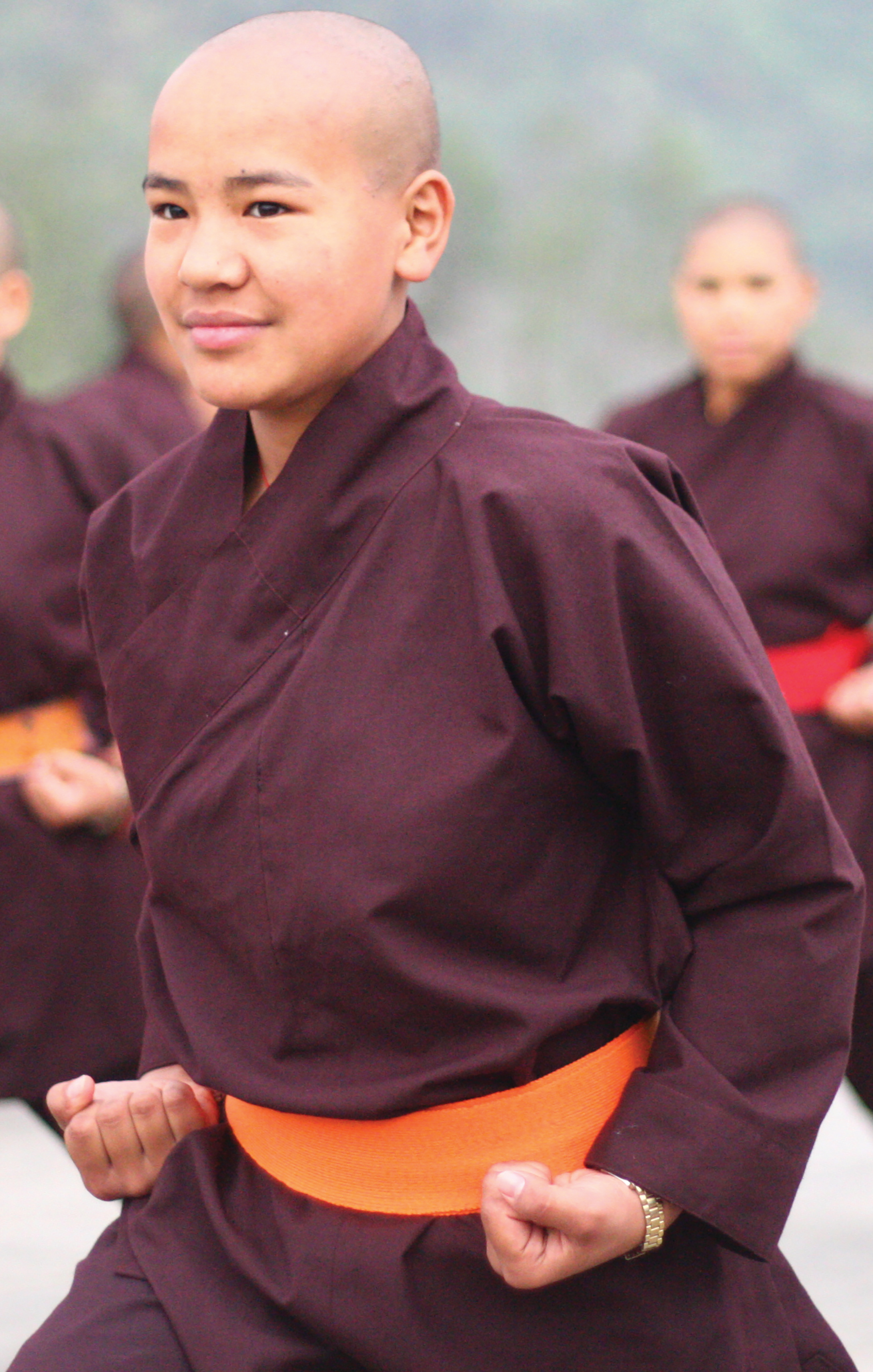
Buddhist nuns practicing kung fu self-defense. Photo Credit: Drukpa Publications Pvt. Ltd—www.drukpa.com. Wikimedia Commons.
Conclusion
In these and many other ways, Engaged Buddhists carry on the core teachings of the dharma and apply them to the modern world’s most pressing matters. Using the wisdom and compassion gained through Buddhist meditation and ethical practice, Engaged Buddhists seek to use expedient means to calmly, patiently, creatively, and nonviolently find the Middle Way of balance and moderation between any two extremes (male/female, rich/poor, oppressor/oppressed, healthy/sick, exploited/untouched natural resources). In this way, they seek to alleviate suffering by transforming harmful interpersonal and transregional injustices into healthy and sustainable dynamics.
Notes
1 Levi McLaughlin, “In the Wake of the Tsunami: Religious Responses to the Great East Japan Earthquake,” CrossCurrents Journal 61, no. 3 (Sept 2011): 290-297. http://onlinelibrary.wiley.com/doi/10.1111/cros.2011.61.issue-3/issuetoc
2 Global Roundup of Buddhist Responses to COVID-19 (July 8, 2020 webinar): http://www.jivaka.net/buddhism-in-the-pandemic-video-materials/ (accessed 2/24/21).
3 Space prevents a fully detailed analysis of all the various Hindu, Jain, and Buddhist theories of karma, which vary considerably (e.g. the causal force behind the Hindu Vaisheshika school’s atomism, the karmic “dust” of Jainism, Yogacara Buddhism’s storehouse consciousness, etc.). See Wendy Doniger (O’Flaherty), Karma and Rebirth in Classical Indian Traditions (University of California Press, 1980) as well as Ronald Neufeldt, Karma and Rebirth: Post-Classical Developments (Sri Satguru / Motilal Barnasidass Publishers, 1995), among others.
4 The Dalits were considered to be entirely removed from the four varnas, that is, from the Hindu caste system of brahmin priests, kshatriya warrior-nobles, vaishya farmers and merchants, and shudra servants. The British colonial census and various 19th century anthropological surveys codified this loose four-tiered social structure into fixed administrative and legal categories. The Dalits were expected to maintain physical distance from other castes, were relegated to only the dirtiest and most dangerous occupations, and were subject to systemic generational discrimination. After India achieved independence from England in 1947, the term “untouchable” was officially outlawed in the 1950 Constitution of India.
5 Mitchell, Donald W. Introducing Buddhism, Chapter 10.
6 United Nations Sustainable Development Goals “Gross National Happiness Index” https://sustainabledevelopment.un.org/index.php?page=view&type=99&nr=266&menu=1449#:~:text=The%20nine%20domains%20are%3A%20psychological,and%20resilience%2C%20and%20living%20standards. (accessed 2/17/21)
7 Aung San Suu Kyi’s National League for Democracy (NLD) won Myanmar’s democratic Parliamentary elections in 1990 but the ruling military junta called the Tatmadaw put her under intermittent house arrests for a total of 15 years. Her Buddhist-inspired writings and her nonviolent response to political persecution helped garner her the Nobel Peace Prize in 1991. However, when she served as the State Counsellor (a newly created role akin to Prime Minister or head of state) from 2016-2021 as part of the NLD’s power-sharing arrangement with the Tatmadaw, she supported the military’s crackdown on the ethnic and religious minority of Rohingya muslims in Rakhine province. This action peaked in 2017 with an estimated 24,000-30,000 raped and/or killed and over 700,000 refugees violently displaced into neighboring Bangladesh. Other countries and NGOs have called this ongoing crisis a genocide, fueled by the twisted rhetoric of Buddhist nationalism promoted by the monk Ashin Wirathu.
In 2020 the International Court of Justice in the Hague ordered Myanmar to prevent any further acts that would violate the Genocide Convention, and in 2021 the Tatmadaw’s coup d’etat reasserted total control and sentenced Aung San Suu Kyi to prison time and continued house arrest.
Glossary
Eightfold Path: the Fourth Noble Truth that outlines how to achieve Nirvana through ethical conduct and meditative practice, leading to wise, compassionate action.
Engaged Buddhism: a term first coined by Thich Nhat Hanh in the 1960s to indicate the use of Buddhist teachings to solve modern-day problems.
Five Precepts: five lay vows to avoid killing, lying, stealing, sexual misconduct, and intoxicants.
Four Noble Truths: the basic teachings of Buddhism. (1) Life is suffering; (2) Suffering is caused by desire; (3) To stop suffering we must extinguish desire (Nirvana); (4) The Eightfold Path can help us achieve nirvana (see above).
His Holiness the Dalai Lama (b. 1935): the spiritual leader of the Tibetan people in exile and the 1989 Nobel Peace Prize laureate. He is said to be the living bodhisattva of compassion.
Karma: personal and collective “actions” as well as the consequences of those actions.
Mahāyāna Buddhism: “Greater Vehicle” Buddhism that developed at the turn of the millennium (1st century BCE–1st century CE) and that persists in Northeast Asian regions like Tibet, China, Korea, Taiwan and Japan.
Middle Path: the Buddha’s teaching of non-extremism that rejects black and white thinking and embraces moderation and balance in all things.
Nirvana: a state of mind completely without desire. The Sanskrit term literally means “to blow out” or extinguish the flame of desire.
Sangha: the community of Buddhist practitioners. See the Three Jewels.
Theravāda Buddhism: the classical Indian “Tradition of the Elders” that persists in Southeast Asian countries like Sri Lanka, Myanmar, Thailand, Cambodia, Laos and Vietnam.
Thich Nhat Hanh: Vietnamese Zen monk (1926–2022) who taught mindfulness, nonviolence, interfaith dialogue, environmental awareness and social justice while living in exile in France for more than forty years.
Three Jewels of Buddhism: The Buddha (teacher), the Dharma (teaching) and the Sangha (community of practitioners).
Vinaya: the monastic codes, that along with scriptures (sūtras) and scholastic commentaries (abdhidharma), comprise the Three Baskets of Buddhism (the Tripiṭaka)
Suggested Questions
- The first Noble Truth of Buddhism teaches that life is suffering. How have Buddhist teachings tried to alleviate the inevitable physical and mental suffering of the human condition?
- Name three modern Buddhist responses to the problem of poverty.
- How does Buddhism see the natural world? How has it tried to protect the environment?
- How have modern day Buddhists responded to aggression and violence?
- What do you think about the double standard for men and women in the Sangha?
Suggested Activities/Assessments
- The second of the Four Noble Truth says that much of our suffering is caused by desire (i.e., we want what we don’t have, and we don’t want what we do have). Reflect on this in the modern-day context. Select a single media product today (e.g. a film, podcast, music video, television episode, social media influencer, etc.) and analyze how it amplifies or creates the desire for a material object, power, or influence. What happens when we get these things? What happens when we don’t, or when we lose them? How can we distinguish between healthy ambition and obsessive greed?
- Assess your hometown or your school according to the nine factors of the Gross National Happiness (GNH) index. What did you learn from this exercise? What parts of your community need help?
- Dialogue Assignment: Imagine you are the Dalai Lama, whom Tibetan Buddhists believe embodies perfect compassion and wisdom. Write an imaginary dialogue between the His Holiness the Dalai Lama and one of your perceived enemies. What would the Dalai Lama say to them? How might you resolve the conflict using Buddhist ideas and ideals? You will be graded on how well you represented Buddhism (accuracy), and how well you wrote the imagined scenario (creativity).
Suggested Resources
Thich Nhat Hanh’s Plum Village app: https://plumvillage.app/about-the-plum-village-app/
Liberate app for Buddhist BIPOC community: https://apps.apple.com/us/app/liberate-cx/id1451620569
Gleig, A. (2021, June 28). Engaged Buddhism. Oxford Research Encyclopedia of Religion. Retrieved 23 Aug. 2025, from https://oxfordre.com/religion/view/10.1093/acrefore/9780199340378.001.0001/acrefore-9780199340378-e-755